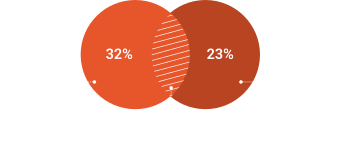
Why are migrants choosing certain destination locations?
Finding better job opportunities
55%
For marriage purpose
32%
Finding better wages
25%
Proximity to home / village
23%
Joining other family members
16%
Greater freedom within destination
12%
Better educational opportunities
7%
Better healthcare services
5%
Who are migrants moving with?
46%
Spouse
39%
Children
26%
Other family members
21%
Parents
17%
Alone
7%
Other workers
6%
Friends
What duration are migrants moving for?
Permanent migrant
55%
Long-term Migrant (One or more years)
15%
Short-term / temporary migrant (every year for one or more months)
9%
Migrated temporarily once but don’t plan to migrate again
9%
Migrate some years for one or more months
8%
Prefer not to answer
4%
How many migrants are negatively impacted by extreme weather events?
3%
No. of migrants not impacted negatively by extreme weather
What occupations are migrants involved in at destination locations?
51%
Others
14%
Waste processing workers
14%
Construction workers
10%
No Employment
7%
Food processing factory worker
7%
Digital platform worker
5%
Factory Workers
What extreme weather events are migrants facing at destination locations?
80%
Increasing heat
62%
Excess rain
36%
Flooding
27%
Increased unpredictability of weather / Seasons
23%
Cyclones / typhoons / hurricanes
15%
Increasing cold
9%
Thunderstorms
9%
drought
5%
Landslides / mudslides
What work-related impacts are migrants facing as a result of extreme weather events at destination locations?
50% Wage loss
28% Wage cut
22% No impact faced
7% Employment related asset loss
What household impacts are migrants facing as a result of extreme weather events at destination locations?
45%
Health related issues
16%
Communication methods slowed or lost
32%
Transportation routes in/out of migrant location damaged/slowed
16%
Limited or damaged access to water or sanitation
24%
Food insecurity
13%
House damaged
How are migrants coping with these work and household impacts due to extreme weather at destination locations?
32%
Support from family and friends
28%
Used savings
26%
Found additional work at the destination
21%
Loan from informal sources such as moneylenders
17%
No coping mechanisms
10%
Additional family members took on jobs locally
What external support is available to migrants during/after these extreme weather events at destination locations?
48%
Emergency relief from the government
29%
No assistance received
22%
Finding an alternate job
16%
Emergency relief from CSOs/NGOs
15%
Compensation from employers
5%
Skilling courses by employer
PCI empowers community-led organizations across South and Southeast Asia. PCI promotes initiatives that work deeply – and at scale – on the ground and leverage this to change systems.