

Philippines

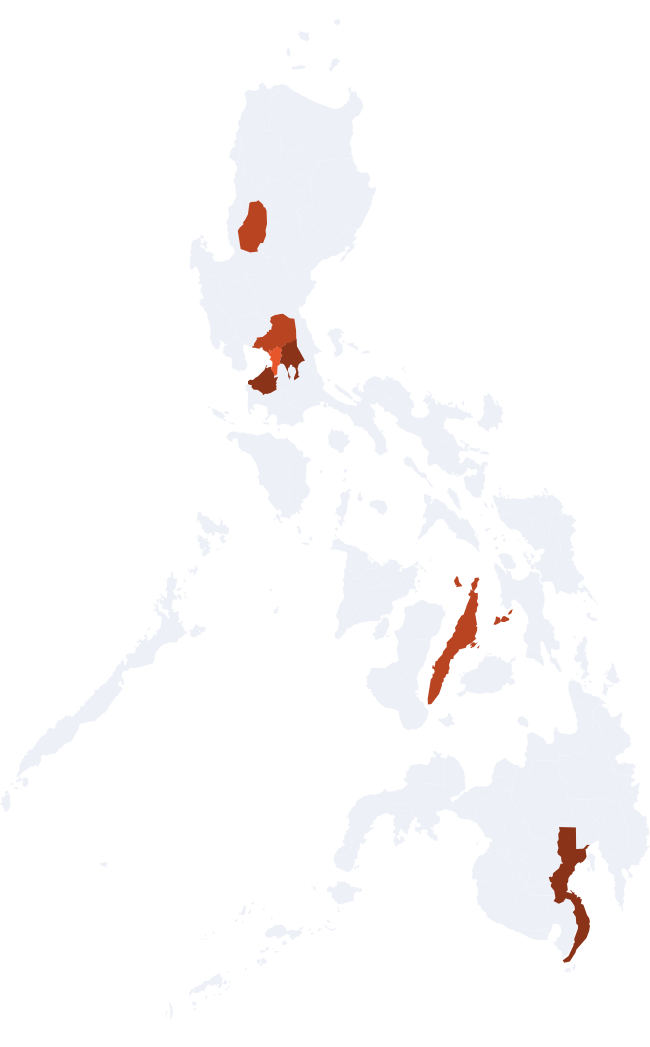
In Philippines, 3,582 migrants were surveyed – representative of ~30 million internal migrants in the country. This accounted for 15% of the total sample across the five countries surveyed.
Filipino migrants leave their villages for a mix of personal, economic, and environmental reasons. While marriage is a notable driver, many also move due to livelihood challenges, insufficient wages, and employment scarcity.Climate-related issues—such as disasters, land damage, and weather unpredictability also contribute to migration decisions.
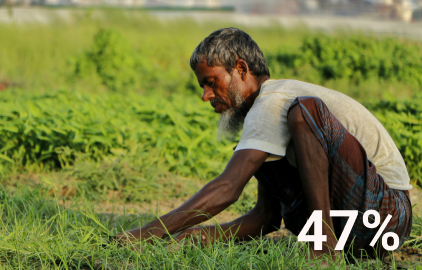
Filipino migration is deeply family-oriented. Most migrants move with spouses, children, and even parents. This highlights the collective nature of migration decisions on migration.
In the Philippines, long-term migration is prominent. A possible reason for this could be the high migration costs associated with travelling by air in Southeast Asian countries with archipelagic landscapes. Apart from this, a UNESCO report mentions that at least 75% of the internal migrants in the Philippines are able to find jobs after migrating. This could be a motivating factor for them to stay at their destination location for longer periods.
A majority of migrants from the Philippines have experienced negative weather impacts, both in their villages and at destinations. This highlights the wide geographic spread of climate vulnerability across their migration journey.
No. of migrants not impacted negatively by extreme weather
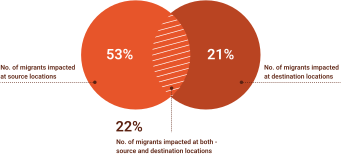
At source locations, 91% of 1,177 surveyed migrants reported experiencing weather-related impacts either at home or in both source and destination areas.
At destination locations, 57% of 2,405 surveyed migrants reported similar challenges either at their current location or across both locations.
These findings highlight the widespread climate vulnerabilities that internal migrants in the Philippines must navigate throughout their migration journey.
In the Philippines, the main impact of severe weather has been job loss, with moderate effects on wages. Job loss was significantly high at source locations in the Philippines. Typhoons, being one of the major weather events they face, could be a contributor to this.

In the Philippines, households experienced significant structural damage and some even reported complete destruction of houses. While fewer respondents noted food insecurity or service disruptions. The high incidence of housing damage points to the destructive power of typhoons and the need for resilient shelter infrastructure in climate-vulnerable areas.

.svg)