
Coping with Climate: Evidence & Insights
A study across five countries in South and Southeast Asia
.svg)


OVERALL ANALYSIS

A study across five countries in South and Southeast Asia
Our sampling methodology for the dataset
Age-wise distribution of internal migrants surveyed
Gender-wise distribution of internal migrants surveyed
Caste-wise distribution of internal migrants surveyed
Reasons for migration
Reasons for choosing destination location
Who are they migrating with
Duration of migration
Migrants negatively impacted by extreme weather events
What livelihoods do migrants belong to at source locations?
Negative Weather Impact on Household
How are migrants coping with these livelihood and household impacts at source locations?
Assistance Received
The dataset used in this dashboard was collected between April and July 2024. It provides an overview of the 23,915 migrants surveyed across source and destination locations in five countries where People’s Courage International is operational.
Five countries were selected for the research to ensure a cross-comparative understanding within South and Southeast Asian regions.
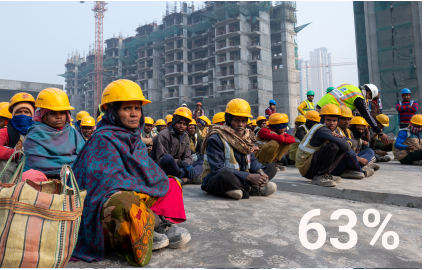
Migration is largely an act of necessity, shaped by economic and livelihood pressures, rather than by choice or single events. The most commonly cited reasons across all five countries surveyed were lower wages (63), lack of job opportunities (58), and livelihoods becoming unreliable or unsustainable (46). These findings reinforce the role of economic distress as the leading force behind migration decisions. These patterns point to a complex web of economic vulnerability, debt, and environmental stress that collectively push people to migrate—often as a last resort rather than a choice.
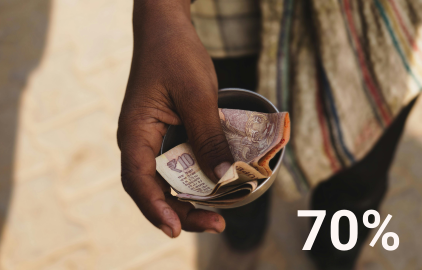
Migration is often a collective experience, with most individuals moving alongside family members or familiar social networks. However, interestingly, less than one-fourth migrants did mention moving alone, indicating that a notable share undertake this journey without direct social support.
Migration is often not a permanent move, but rather a recurring or seasonal strategy. Many migrants travel for short periods, returning home after a few months, while others repeat this cycle year after year depending on work availability or economic needs. Some stay for longer stretches – up to several years, before eventually returning to their villages. Only a smaller portion of migrants settle permanently at their destination. These patterns reflect how migration is commonly used as a flexible response to unstable livelihoods and changing conditions at their source locations.
9 out of 10 survey participants reported having been impacted by extreme weather.
Notably, a higher percentage of migrant workers reported being impacted at source than at destination locations. This could indicate that migration helps to slightly reduce exposure to extreme weather events, but the majority of migrants remain exposed irrespective of their location.
No. of migrants not impacted negatively by extreme weather
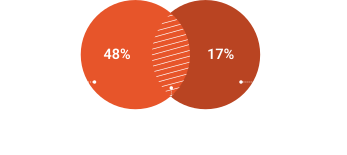
Data from internal migrants across south and southeast asia
Migrants are moving between their hometowns (source locations) and new destinations for a variety of reasons. Among the most significant drivers are economic challenges, such as limited job opportunities and low wages, which continue to push individuals in search of better prospects.
However, there's another layer to the story. While extreme weather may not be the main reason people migrate, it’s becoming an increasingly disruptive force. Many migrants are experiencing greater financial and personal strain due to climate-related events that affect their livelihoods, homes, and working conditions—both where they come from and where they go.
74% (11,326 people) reported being affected by extreme weather either at the source or at both source and destination.
The data below highlights climate-related challenges at the source based on insights from these 11,326 individuals.
52% (4,517 people) said they had faced weather impacts either at the destination or at both locations.
This section focuses on climate-related challenges at the destination from those 4,517 responses.
For many migrants, the impact of weather on livelihoods back in their villages has been profound. The most common consequences include loss of wages due to fewer workdays and reduced daily wages, both of which severely affect financial stability. These disruptions often push households toward migration as a survival strategy—one shaped as much by economic necessity as by environmental vulnerability.
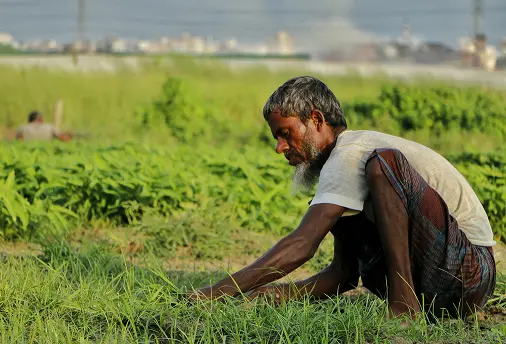 45% Crop loss
 13% Animal loss
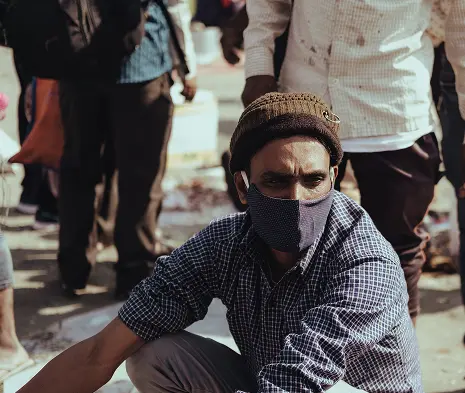 55% Wage loss
 7% Employment related asset loss
 49% Wage cut
 19% Job loss
Across regions, weather events have had serious effects not just on livelihoods but also on the well-being of migrants' households and families. The most common impacts include food insecurity, health problems, and damage to homes, reflecting how deeply weather disruptions affect daily survival. When weather hits, it strikes both income and the home, leaving families to recover on multiple fronts.
Weather events at migration destinations continue to have a significant impact on migrant households. Health issues are the most commonly reported consequence, followed closely by food insecurity and damage to migrants homes. These effects reflect the compounded vulnerability of migrants who often live and work in precarious environments. Migrants don't just bring their labour to new places, they carry with them the burden of weather uncertainty.